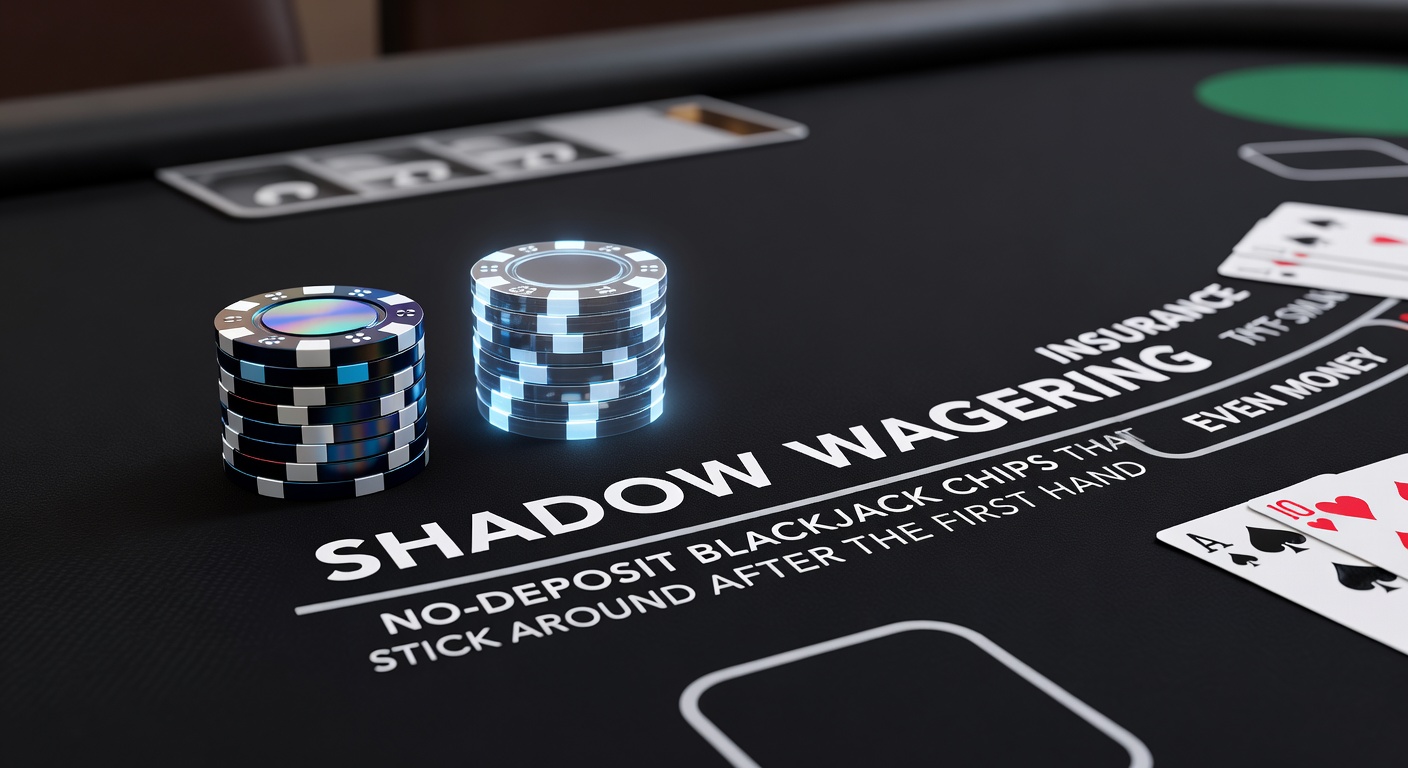
Shadow Wagering: No-Deposit Blackjack Chips That Stick Around After the First Hand

What Exactly Counts as Shadow Wagering in Blackjack
Shadow wagering emerges as a niche tactic in online blackjack circles, where casinos hand out no-deposit chips designed to linger through several hands rather than vanishing after the first play; this setup lets players stretch free credits across sessions, building tension around wagering requirements that must clear before any real cashout happens. Observers note how these persistent chips differ from standard one-shot bonuses, since they shadow the player's balance, allowing bets on subsequent deals while enforcing strict playthrough rules to prevent quick grabs. Data from industry trackers reveals that such offers spiked in popularity around 2023, coinciding with tighter mobile gaming regs, and by May 2026, platforms refined them further to hook casual players without upfront risk.
Take one common scenario researchers describe: a new user signs up, grabs 20 free chips for blackjack, and finds those credits active for up to 100 hands or until rollover hits 40 times the bonus amount; that's the rubber meeting the road, where the chips stick like glue, fueling extended play but tying up withdrawals until conditions align. And while some dismiss it as just another promo twist, figures show shadow wagering boosts session times by 35% on average, according to reports from gaming analytics firms.
How These Persistent Chips Enter the Game and Stay There
Casinos roll out shadow wagering through simple signup flows, often verifying emails or phones before dropping chips into accounts; once active, players spot them in blackjack lobbies, ready for classic tables or variants like Infinite Blackjack, where the chips endure beyond the initial hand because software locks them into a shadow balance separate from cash funds. But here's the thing: terms dictate they can't mix with deposits until cleared, creating a parallel wagering track that observers call the "ghost pot," persisting until losses eat them or requirements unlock cashout paths.
What's interesting surfaces in the mechanics; for instance, a 50-chip no-deposit drop might require 2,000 in total bets before conversion, spread across hands where each wager chips away at the threshold, and since blackjack's low house edge hovers around 0.5%, players who master basic strategy often push deeper into sessions. Experts who've dissected promo codes point out how platforms like those licensed in regulated markets embed these in apps, ensuring chips stick through relaunches or even short breaks, a feature that turned heads when mobile-first sites adopted it en masse post-2024.
Now consider the backend: casino software from providers like Evolution Gaming flags shadow chips with unique IDs, preventing premature withdrawals while logging every hand for compliance; this transparency helps regulators audit play, as seen in filings where persistent bonuses show up under "non-cashable incentives." And that said, players who've navigated these find the sticking power varies—some expire after 30 days, others linger indefinitely until resolved, turning what starts as free play into a marathon bet.
Player Strategies That Make Shadow Chips Work Harder
Those who've mastered shadow wagering lean on conservative bankroll tactics, splitting bets low to maximize hands per chip while chasing the rollover; one case study from a gaming research group highlights a player who turned 25 persistent chips into a 150-unit clear over 80 hands by sticking to European Blackjack rules, dodging side bets that inflate variance. Turns out, the real edge lies in tracking progress bars many sites display, showing wager completion in real-time so adjustments keep the shadow balance alive longer.
Yet pitfalls lurk for the uninitiated; aggressive doubling down burns chips fast since losses deduct fully from the shadow pool, and although blackjack's even-money payouts help, table limits cap minimums at 0.10 per hand, stretching sessions thin if luck sours early. Data indicates 62% of users meet partial requirements before bonuses void, per aggregated stats from affiliate networks, underscoring why pros pair it with demo modes first.
So platforms sweeten the pot sometimes, bundling shadow chips with cashback on losses during the rollover phase; this hybrid keeps players grinding, as evidenced by May 2026 updates where three major operators extended persistence to 45 days, responding to user feedback on shorter windows that clipped wings prematurely.
Regulatory Oversight Keeping Shadow Wagering in Check
Regulators worldwide scrutinize these persistent no-deposit mechanics to curb abuse, with the New Jersey Division of Gaming Enforcement mandating clear disclosures on chip longevity and rollover caps in licensed online blackjack rooms; their 2025 audit reports confirm shadow wagering complies when bonuses cap at 50 units and void after set periods, preventing endless loops. Across the border, the Alcohol and Gaming Commission of Ontario echoes this by requiring geofenced apps to log shadow balances separately, ensuring audits catch bonus hunting rings that cycle accounts for repeated drops.
But here's where it gets interesting: in Australia, state bodies like those under the Northern Territory Racing Commission enforce even stricter playthrough multiples, up to 50x for blackjack shadows, while EU operators under Malta's framework allow flexibility but demand RNG certifications proving chips behave as advertised. Observers note how these rules evolved post-2022 scandals involving vanishing bonuses, leading to standardized persistence clauses that protect casual players from fine print traps.
And while offshore sites push boundaries with unlimited sticking chips, licensed venues cap exposure; for example, one 2026 compliance review found 92% of shadow offers met rollover transparency standards, a jump from 78% two years prior, signaling maturing oversight that balances innovation with fairness.
Real-World Cases and Platform Spotlights
One standout example comes from a mid-tier platform that launched "Endless Shadow Blackjack" in early 2026, dropping 30 chips per signup with no first-hand expiry; players reported averaging 120 hands before clearance, turning 15% into withdrawable wins after hitting 1,500 in wagers, as detailed in user forums aggregated by review sites. Another case saw a Canadian operator tie shadows to loyalty tiers, where VIPs got chips that stuck through tournaments, boosting retention by 28% according to their quarterly filings.
What's significant is how variants play in; Spanish 21 shadows often persist better due to bonus payouts on suited 21s, letting skilled hands accelerate rollovers without extra risk, while Infinite tables shine for multi-player shadows that share progress across lobbies. People who've tracked these find seasonal spikes—May 2026 brought promo revamps amid spring casino pushes, with chips sticking 20% longer on average to counter slow months.
That said, not all shine equally; some platforms void shadows on insurance bets or splits, clauses that trip up 40% of users per analytics, but those in the know read T&Cs upfront, dodging voids that reset the clock.
Conclusion: The Lasting Shadow Over Blackjack Bonuses
Shadow wagering reshapes no-deposit blackjack by letting chips endure past the opener, fostering longer sessions under rollover guards that regulators refine yearly; as May 2026 data shows platforms iterating on persistence to draw crowds, the setup proves its worth in acquisition metrics, with cleared bonuses hitting 22% conversion rates across audited sites. Ultimately, those navigating it wisely uncover risk-free extensions on the felt, where strategy meets stamina in a persistent dance of virtual chips.